So You Want to Ride NCEA, What’s Next? A Personalized Guide for Prospective Student-Athletes
🎯 Key Recruiting Dates: What to Do and When
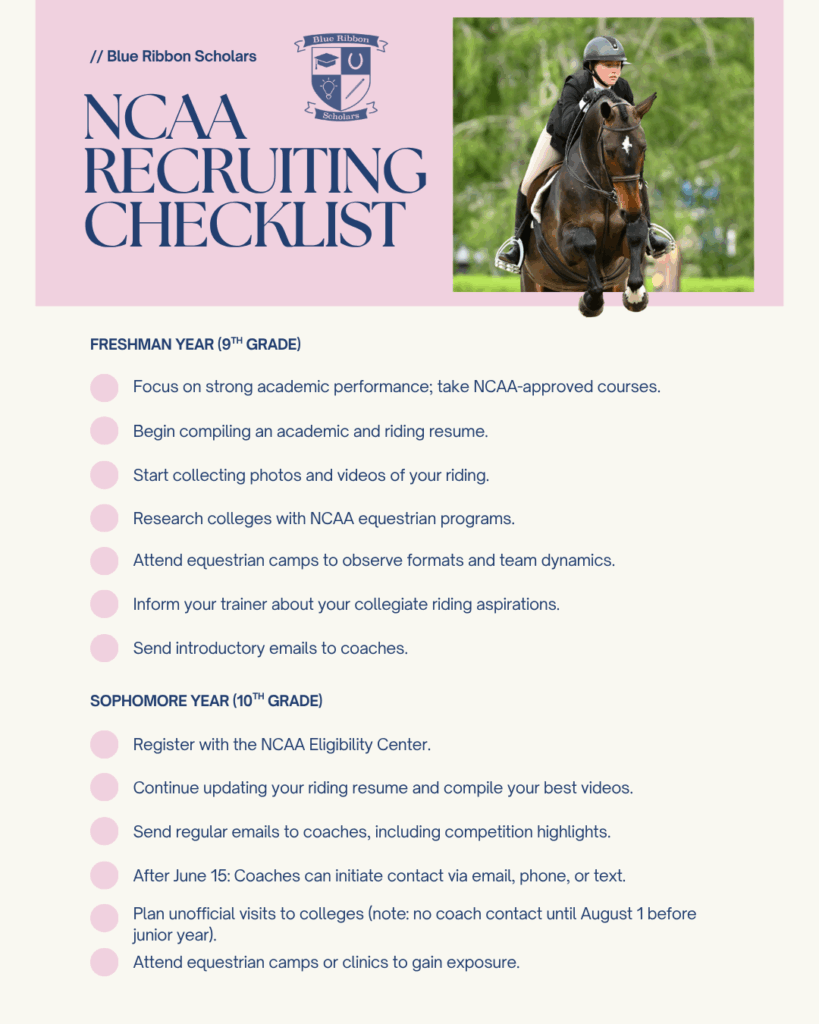
Freshman Year (9th Grade)
- Focus on academics and NCAA-approved courses; begin building an academic/riding resume.
- Start collecting photos/videos of your riding and researching NCAA equestrian programs.
- Attend camps, inform your trainer of your goals, and send introductory emails to coaches.
Sophomore Year (10th Grade)
- Register with the NCAA Eligibility Center and update your resume and videos.
- Start sending regular emails to coaches with competition highlights.
- After June 15, coaches may contact you; attend camps and plan unofficial college visits.
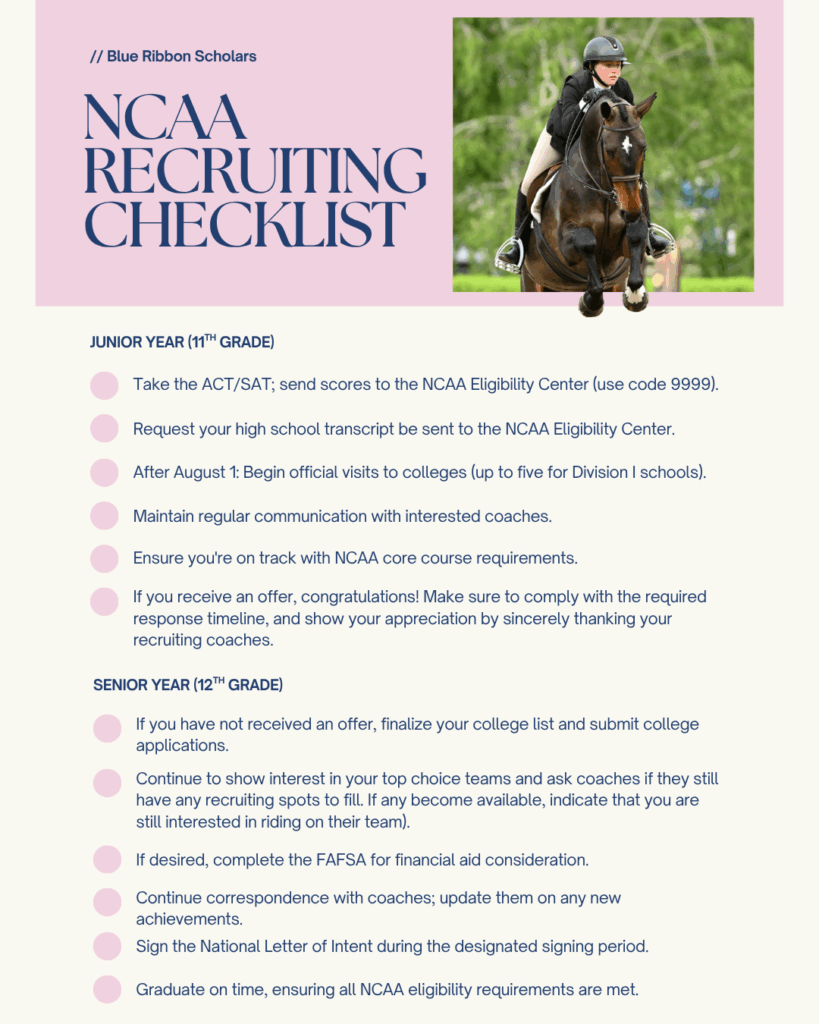
Junior Year (11th Grade)
- Take the ACT/SAT and send scores to the NCAA (code 9999); send your transcript as well.
- After August 1, begin official college visits (up to 5 for Division I).
- Stay in regular contact with coaches and confirm you meet core course requirements.
Senior Year (12th Grade)
- Finalize college list, apply to schools, and complete the FAFSA if needed.
- Stay in touch with coaches—express continued interest if spots remain.
- Sign the National Letter of Intent during the signing period and ensure you graduate on time.
Make sure you download and save the complete version of your recruiting timeline checklist here!
Step 1: Build a Strong Academic and Athletic Resume
Your GPA and test scores matter just as much as your show record. Be sure your resume includes:
- Academic achievements (honors, GPA, test scores)
- Riding accolades (divisions, championships, major shows)
- Extracurriculars and leadership roles
- A headshot and action riding photo
Need help crafting a standout resume? Our tutors at Blue Ribbon Scholars specialize in athlete-focused college prep, including resume building, essay coaching, and time management.
Need help with coursework? We also can help with all subjects with expert tutors who also understand the equestrian lifestyle. See our services.
Step 2: Make Your YouTube Videos Count
- Your name and graduation year in your YouTube channel name
- Flatwork clips showing adjustability and basics. There are many flat patterns to practice available in the NCEA Championship Archives
- Courses at shows and in lessons, ideally on a variety of horses. Specify which horses you own/lease, and any catch rides in your video titles and descriptions
- Optional, but fun: A brief introduction video, no more than 90 seconds (state your name, year, hometown, and goals)
Step 3: Research your Options
- Visit the team’s website and social media
- Look at rosters to see the level of riders they recruit
- Reach out to current riders on social media or via email to learn more about the team’s culture. Networking is key!
Step 4: Register with NCAA and Eligibility Center
If you’re aiming for an NCEA team (Division I or III), register early with the NCAA Eligibility Center. You’ll need:
- Family and personal information
- Transcripts
- Test scores if available
- $100 for the registration fee
Step 5: Reach Out—The Right Way
- Reach out with a personalized email that includes your resume and video
- Need help? Blue Ribbon Scholars can assist in email creation and communication strategy! Click here to learn more.
Include:
- Why you’re interested in their equestrian program
- Why the college/university interests you academically
- A quick summary of your academics and riding background
- IF you are a rising junior: your contact info and availability for a call
We offer one-on-one advising to help families navigate this process and ensure deadlines aren’t missed. Contact us today!
Step 6: Camps & Unofficial Visits
Step 6: Camps & Unofficial Visits
Camps & Clinics:
- Run by college coaches or programs
- Opportunity to be evaluated in-person in flat and fences
- Often open to all levels and ages
- Great for getting on a coach’s radar early
Unofficial Visits:
- Visits to campuses at your own expense
- Can happen before official visits (and often do!)
- You can tour the school, watch a practice or meet the team
- Coaches can’t engage until specific timelines (e.g., post–Aug 1 of junior year for NCEA)
Step 7: Ask Good Questions on Visits
- Team dynamics and expectations
- Academic support for athletes
- How schedule conflicts with shows and class are handled
- What off-season training looks like
Step 8: Keep Showing Up—In and Out of the Ring
The recruiting journey is often a marathon, not a sprint. Keep working hard in the ring, maintain your grades, and communicate regularly with interested programs. If you are a senior, this is your time to stay focused, finish strong, and remain engaged.
- If you receive a verbal offer, here’s what to prioritize during senior year:
- Complete the FAFSA if you’re applying for financial aid.
- Sign your National Letter of Intent (NLI) during the appropriate signing period, if applicable.
- Ensure you’re on track to graduate with all required courses and eligibility criteria.
- If you’re a senior and you haven’t been recruited yet, remember, if one door closes, another opens…
- Make a list of colleges that you would be happy to attend if you are not recruited. Blue Ribbon Scholars can help with this, too!
- Consider programs beyond Division I, like schools with IHSA teams, club riding options, or schools with strong academics and equestrian communities.
- Stay in regular contact with coaches—reaffirm your interest and share updates on your riding and academics. If a late spot opens up, it could become yours.
- A non-traditional route can still align perfectly with your future goals—we can help you find the best overall fit.
- Finally, don’t forget:
- Coaches often recruit for character as much as talent.
- Being collaborative, responsible, and proactive goes a long way.
Academics matter—your GPA and class performance can still influence final offers. If you’re in online school, don’t risk falling behind. This is exactly why tutoring shouldn’t be a last resort!
Every student-athlete’s journey is different, and that’s where we come in. At Blue Ribbon Scholars, we offer personalized academic support, college consulting, and mentorship for riders across North America. Whether you’re a freshman just learning the ropes or a senior finalizing applications, we’re here to help you ride into your future with confidence.